


-
![4g Outdoor Waterproof Solar Camera]() 4g Outdoor Waterproof Solar CameraConstruction sites are vulnerable to theft, vandalism, and unauthorized access. Solar-powered security cameras offer a practical solution for monitoring construction sites, especially in locations
4g Outdoor Waterproof Solar CameraConstruction sites are vulnerable to theft, vandalism, and unauthorized access. Solar-powered security cameras offer a practical solution for monitoring construction sites, especially in locations -
![Spherical Waterproof PTZ Solar Camera]() Spherical Waterproof PTZ Solar CameraSolar-powered cameras utilise renewable energy, reducing reliance on non-renewable resources. By utilising the sun's energy, they promote sustainable practices and contribute to a greener
Spherical Waterproof PTZ Solar CameraSolar-powered cameras utilise renewable energy, reducing reliance on non-renewable resources. By utilising the sun's energy, they promote sustainable practices and contribute to a greener -
![Mini Body Camera Pen]() Mini Body Camera PenOne option for storing the video is to buy a DVR, but you do not have to be limited to the storage space you can house on-site. With great wireless outdoor security camera systems that connect to the
Mini Body Camera PenOne option for storing the video is to buy a DVR, but you do not have to be limited to the storage space you can house on-site. With great wireless outdoor security camera systems that connect to the -
![1080p Video Surveillance Outdoor]() 1080p Video Surveillance OutdoorOne option for storing the video is to buy a DVR, but you do not have to be limited to the storage space you can house on-site. With great wireless outdoor security camera systems that connect to the
1080p Video Surveillance OutdoorOne option for storing the video is to buy a DVR, but you do not have to be limited to the storage space you can house on-site. With great wireless outdoor security camera systems that connect to the -
![Solar Camera]() Solar CameraThis Spherical waterproof PTZ Solar Camera is equipped with high resolution 1920x1080 night vision and color night vision function, it can show you colorful video.At the same time, the wireless
Solar CameraThis Spherical waterproof PTZ Solar Camera is equipped with high resolution 1920x1080 night vision and color night vision function, it can show you colorful video.At the same time, the wireless -
![Cctv-camera]() Cctv-cameraWith 1080P 15fps resolution, the Wireless Outdoor Security Solar Camera captures sharp and bright videos. Offers ultra-clear images and videos regardless of weather.12 infrared lights automatically
Cctv-cameraWith 1080P 15fps resolution, the Wireless Outdoor Security Solar Camera captures sharp and bright videos. Offers ultra-clear images and videos regardless of weather.12 infrared lights automatically -
![Wireless Outdoor Security Camera For Home Security]() Wireless Outdoor Security Camera For Home SecurityWith 1080P 15fps resolution, the Wireless Outdoor Security Solar Camera captures sharp and bright videos. Offers ultra-clear images and videos regardless of weather.12 infrared lights automatically
Wireless Outdoor Security Camera For Home SecurityWith 1080P 15fps resolution, the Wireless Outdoor Security Solar Camera captures sharp and bright videos. Offers ultra-clear images and videos regardless of weather.12 infrared lights automatically -
![Intelligent Solar Camera]() Intelligent Solar CameraWith 1080P 15fps resolution, the Intelligent Solar Camera captures sharp and bright videos. Offers ultra-clear images and videos regardless of weather.12 infrared lights automatically sense the
Intelligent Solar CameraWith 1080P 15fps resolution, the Intelligent Solar Camera captures sharp and bright videos. Offers ultra-clear images and videos regardless of weather.12 infrared lights automatically sense the -
![Street Light Solar CCTV Cameras]() Street Light Solar CCTV CamerasWith 1080P 15fps resolution, the Intelligent Solar Camera captures sharp and bright videos. Offers ultra-clear images and videos regardless of weather.
Street Light Solar CCTV CamerasWith 1080P 15fps resolution, the Intelligent Solar Camera captures sharp and bright videos. Offers ultra-clear images and videos regardless of weather. -
![PIR Intelligent Solar Bullet Camera]() PIR Intelligent Solar Bullet CameraWhen motion is detected, alert notification and detection video will send to your phone in real time, you may use it in outdoor to communicate smoothly and clearly with people near the camera through
PIR Intelligent Solar Bullet CameraWhen motion is detected, alert notification and detection video will send to your phone in real time, you may use it in outdoor to communicate smoothly and clearly with people near the camera through -
![Wifi Solar Powered Outdoor Security Camera]() Wifi Solar Powered Outdoor Security CameraThe solar panel can provide inexhaustible energy for the camera on sunny days. Using Battery Power if in Cloudy.wifi solar powered outdoor security camera adopts ultra-low power consumption
Wifi Solar Powered Outdoor Security CameraThe solar panel can provide inexhaustible energy for the camera on sunny days. Using Battery Power if in Cloudy.wifi solar powered outdoor security camera adopts ultra-low power consumption -
![Spherical Waterproof PTZ Solar Camera]() Spherical Waterproof PTZ Solar CameraThis Spherical waterproof PTZ Solar Camera is equipped with high resolution 1920x1080 night vision and color night vision function, it can show you colorful video.At the same time, the wireless
Spherical Waterproof PTZ Solar CameraThis Spherical waterproof PTZ Solar Camera is equipped with high resolution 1920x1080 night vision and color night vision function, it can show you colorful video.At the same time, the wireless


Brief Introduction to CCTV Camera
A closed-circuit television system consists of not just the cameras but also includes the wiring, video footage storage, monitors, access control, and general system management. CCTV cameras can help secure your business and personal spaces through round-the-clock surveillance. Many cameras today have motion sensors as well. This helps detect any irregular movements around the premises under monitoring.

The functioning of every CCTV system differs and depends on the components installed in the system. However, the general process is the same for all security camera systems. The system can be scaled up and down in terms of size and also be connected to one of the multiple monitors to monitor the frame. The camera first clicks multiple images of an area in a continual sequence and then renders them wirelessly to a system that is chosen by the admin via a wired or internet-based connection. The system then combines all those images to form a video that can be viewed on the monitor. Some cameras even have the ability to zoom in and out of the frame depending on the lens and focal length used in the system.
1.Analog Security Systems
An analog surveillance system will work once you synchronize your DVD recorder to a standard analog camera. The video recorder will then receive the video from the camera, process it using its neural engine, and save it in the system in a compressed form. These security camera systems let you transfer your footage over the internet on cloud-based systems for viewing later. To sum up, the digital video recorder is solely responsible for compressing, converting, streaming, and storing all the video in this case. One can also re-program the built-in functions in their cameras such as motion detection, schedules, and notifications using the recorder menu.
2.IP Security Systems
If you have a high budget and want superior quality, then you may go for this option. This system eliminates the need for a DVR(digital video recorder) since in an IP camera configuration, the camera can also record, convert, process, and stream the video over the internet. This video can be streamed directly on a personal computer or a mobile-based API without the intervention of a DVR device.
Features of CCTV Cameras
High Resolution for Clear Image Quality
One of the most important features to consider when choosing CCTV cameras is resolution. A high-resolution camera video clips captures clear and detailed images, enabling you to easily identify individuals and objects. The CCTV cameras on the market offer resolutions starting from 1080p (Full HD) and can go up to 4K Ultra HD, providing exceptional image quality. With higher resolution, you can zoom in on specific areas without sacrificing clarity, ensuring that no detail is missed.
Night Vision for Round-the-Clock Surveillance
Effective surveillance shouldn't be limited to daylight hours. The CCTV cameras are equipped with advanced night vision technology that allows for clear monitoring even in low-light conditions. Infrared (IR) LEDs are commonly used to provide superior night vision capabilities, enabling the cameras to capture footage in complete darkness. When selecting CCTV cameras, look for models with a decent night vision range to ensure that your property is protected 24/7.
Wide Dynamic Range (WDR) for Challenging Lighting Conditions
Different spaces may experience varying lighting conditions throughout the day. Areas with a high contrast between bright and dark areas, such as entrances or windows, can pose a challenge for CCTV cameras. That's where the importance of wide dynamic range (WDR) comes in. The CCTV cameras with WDR, which allows them to balance exposure in challenging lighting conditions. This ensures that both bright and dark areas are captured clearly, providing a more accurate representation of the scene.
Remote Access and Mobile Viewing for Real-Time Monitoring
As a homeowner or business owner, it is essential to have the ability to monitor your property remotely. The CCTV cameras offer remote access capabilities, allowing you to view live footage and recorded videos from anywhere in the world using a smartphone or computer. Mobile viewing apps and software provide convenience and flexibility, ensuring that you can keep an eye on your property at all times. Whether you are at work, traveling, or simply away from home, having access to real-time monitoring brings peace of mind.
Motion Detection and Alerts for Intelligent Surveillance
Constantly monitoring hours of recorded footage can be time-consuming and inefficient. That's where motion detection and alerts come into play. The CCTV cameras feature advanced motion detection technology that can identify movement within the camera's field of view. When motion is detected, the cameras can send instant notifications or alerts to your mobile device, allowing you to quickly assess the situation and take appropriate action. This intelligent surveillance feature helps you stay informed and ensures that no suspicious activity goes unnoticed.
Weatherproof and Durable for Outdoor Use
Whether you are securing your home or business premises, outdoor CCTV security cameras are an essential part of any surveillance system. When selecting outdoor cameras, it is crucial to choose models that are weatherproof and durable. The CCTV cameras are designed to withstand various weather conditions, including rain, snow, and extreme temperatures. Look for cameras with an Ingress Protection (IP) rating, which indicates their resistance to dust and water. Investing in weatherproof and durable CCTV cameras ensures that your outdoor surveillance system remains operational regardless of the weather.
Expandability and Scalability for Future Needs
Your surveillance requirements may evolve over time, and it's important to choose CCTV cameras that can adapt to your changing needs. The CCTV cameras offer expandability and scalability, allowing you to add more cameras or upgrade your system as needed. This flexibility ensures that your surveillance system can grow alongside your property or business, giving you the freedom to expand coverage and enhance security as your needs change.
Integration with Other Security Systems for Enhanced Protection
To maximize the effectiveness of your security system, integration with other security systems is essential. The CCTV cameras can be seamlessly integrated with other security devices, such as alarms, access control systems, and video management software. This integration provides a holistic and centralized approach to security, enabling you to monitor and control multiple systems from a single platform. By integrating your CCTV cameras with other security systems, you can enhance protection and respond quickly to potential threats.
Advantages of CCTV Camera
Crime Prevention
Installing a CCTV camera will help you instantly deter criminals and theft. Most intruders look for easy targets where they are no security measures in place. Seeing the familiar look of a CCTV camera installed at your business site will discourage them to act as they will not want to be caught on camera. We recommend that you look at both internal and external coverage, meaning that no area is unmonitored and you are able to document the flow of people throughout your site via placing CCTV cameras in strategic and well-trafficked locations.
Reduce Security Costs
Manned security comes at a cost, especially 24 hour a day coverage. A CCTV camera helps mitigate this cost by giving you ‘eyes’ across your entire site which can be viewed on a multitude of devices, allowing staff savings. We recommend that clients use remote CCTV monitoring out of hours to give full 24-hour protection. Remotely monitored CCTV cameras are the equivalent of having your own security guard on-site, without the high costs. Remote CCTV monitoring is a service designed to closely monitor and action any emergency services response where necessary. It offers you the peace of mind that your premises are fully protected during your out-of-hours operations and is a truly viable alternative to onsite manned guards.
Deterring Vandalism
The presence of a CCTV camera is usually enough to deter even the most determined vandal, criminals do not want to be caught, so will look to target a location that does not have a CCTV recording any potential criminal activity. We would recommend that your CCTV not only targets well-trafficked areas but also areas where vandalism may take place – a system needs to give you full protection against a multitude of potential events and situations so when planning the layout of your system look to think about a range of potentials.
Provides Camera Footage for Evidence
Any sort of crime against your business brings a range of headaches, however knowing what, why, and who will help you understand what they did, why it happened, and who it was in order to stop it occurring in the future and also provide evidence to ensure the police can take the appropriate action. We set recordings for at least 30 days and with analytics, we are able to set cameras to record when they detect movement, which allows you to easily find and locate footage, as well as save server space.
Handling Disputes
Evidence of an act or acts is a main benefit of CCTV camera. If a dispute happens then CCTV footage can be used when gaining evidence to collaborate stories and gain fact from fiction. Clear, concise, and high-quality footage can help find the exact cause of a dispute before anything gets out of hand and reach a fair agreement between employees, managers, and/or external stakeholders.
Visibility of Entire Business Premises
You cannot be everywhere at once. A CCTV camera can give you a multitude of eyes all around your premisses, from just one device. This allows you to improve business efficiency and productivity, and also see any areas that may need improvement – giving you a clearer indication of what is occurring on a day-to-day basis and ultimately improve business management across your site.
Common Types of CCTV Camera
ANPR/LPR Cameras
ANPR and LPR cameras are used to read and store data on registration plates. They offer a simple and efficient solution to many organisations including tolling, hotel overstay management and the obvious: car parking. ANRP stands for Automatic Number Plate Recognition (LPR cameras stands for License plate cameras) and these devices help to obtain copious information in a high traffic area to keep any premises secure.

Internal and External Dome Camera
The dome camera is one most commonly used for indoor and outdoor security and surveillance. The shape of the camera makes it difficult for onlookers to tell which way the camera is facing, which is a strong piece of design, deterring criminals by creating an air of uncertainty.

Bullet Camera
Bullet cameras are long and cylindrical in shape and are ideal for outdoor use. Their strengths lie specifically in applications which require long distance viewing. Installed within protective casings, the cameras are shielded against dust, dirt and other natural elements. The cameras can easily be mounted with a mounting bracket, and come fitted with either fixed or varifocal lenses depending on the requirements of its intended application.

C-mount Camera
Coming with detachable lenses, C-mount cameras allow for simple lens changes to fit different applications. C-mount cameras can cover distances beyond 40 ft thanks to the possibility to use special lenses with these cameras, whereas standard CCTV lenses can only cover distances of 35-40 ft.

Day/Night Camera
Capable of operating in both normal and poorly lit environments, these cameras benefit from not requiring inbuilt infrared illuminators as they can capture clear video images in the dark thanks to their extra sensitive imaging chips. For this reason, these cameras are ideal for outdoor surveillance applications in which IR cameras are unable to function optimally.

PTZ Pan Tilt & Zoom Camera
PTZ – Pan/tilt/zoom – cameras allow the camera to be moved left or right (panning), up and down (tilting) and even allow the lens to be zoomed closer or farther. These cameras are used in situations where a live guard or surveillance specialist is there operating the security systems.
Maintenance Tips for Your CCTV Camera
1. Regularly Clean Camera Lenses
Check your outdoor and indoor security camera lenses to ensure they are always clean. Look for smudges, dust, water-spots and other undesirable elements. Your camera won’t get clear shots if your lenses are smudged or dirty. You should ideally start by using a compressed air can to blow the lens and remove all loose debris before using a microfiber brush to wipe the lenses very gently. You should perform this duty at least once in three months.
2. Check the Camera’s Housing
The camera’s enclosures should remain waterproof and you can check this by opening your security cameras’ housing to check for signs of water, dirt and condensation. This way, you will know whether the enclosures are still protecting the cameras from rain and wind. Or you can simply inspect for water residue. In certain cases, you may need to apply waterproof silicon around the camera’s housing. You should ideally start by using a compressed air can to blow the lens and remove all loose debris before using a microfiber brush to wipe the lenses very gently. You should perform this duty at least once in three months.
3. Ensure That All Cables are Fully Connected
Check all cable connectors, including those connecting the monitor, DVR (or NVR) and security cameras to ensure that they are all receiving power. Also check the cabling for any signs of wear and tear, replace any exposed wire immediately.
4. Check the Power Supply
Check the power supplies to your CCTV security systems to ensure that there is no loss of power due to thunderstorms, tampering, brownouts or other unwanted events. You may also want to check that your surveillance cameras are receiving their recommended power requirements using a voltmeter. Otherwise, the camera may fail rapidly and it is always cheaper to replace the power supply than buy a new security camera.
5. Check for Corrosion
Check out all connectors for signs of corrosion. If you found any corroded one, replace it immediately since it can cause the rest of the equipment to short out. Usually, once the system is installed, all the connections should be waterproofed by the installer.
6. Dust Your DVR Or NVR
The DVR or NVR may collect a layer of dust over time, and this must be wiped off regularly to prevent it from affecting the recorder’s performance. Use a microfiber cloth to wipe your DVR/NVR or use a blower to dust the crevices. This should be done inside the box as well, open up the recorder and clean the dust. A heavy dust may cause the fan or other components to malfunction.
7. Check the Lighting
Ensure that important areas have enough lighting to illuminate suspects for easy identification. There are good cameras out there that provide clear images during the night time. Another option is to add CCTV illuminators to improve the outdoor light conditions.
8. Periodically Review Camera’s Placement
This should be done to ensure optimum location and camera focus. In many cases, over time the position of the camera may change, either on purpose or accidentally. It’s always recommended to check the camera’s placement and to make sure that the angle is right. The easy way is to check the image on your TV screen and see which camera seems not properly angled.
Key Parameters for Selecting the CCTV Camera
Outdoor/Indoor
One of the parameters that can be easily filtered by available choices is whether the camera is for indoor or outdoor use. While it is essential to use an "outdoor" type camera for outdoor installations to provide IP65/IP66 weather protection, "indoor" cameras are less bulky and more cost effective for indoor installations.
Coverage Area / Target Distance
The second most important parameter in selecting the correct type of camera is to determine the coverage area and target distance for each camera in your system. Below are some of the key camera parameters that will be determined based on the coverage area / target distance
● Fixed vs PTZ
● PTZ (Pan-Tilt-Zoom) cameras as the name suggests give the possibility to user to turn the camera view to any needed direction and to zoom on specific areas. They can be also pre-programmed to automatically scan specific routes. On the other hand, fixed cameras provide constant uninterrupted monitoring of a specific, fixed area like entrances and exits or perimeters.
● Type of Lens
● the type of lens determines the angle width and the distance that each camera can cover. As a rule of thumb, the wider the coverage angle is, the less distance is covered by the camera. Using a vari-focal lens enables you to adjust these two parameters of the camera in practice. There are also 180 degrees or 360 degrees fisheye cameras that are used indoors for providing a wider coverage.
Image Resolution
in IP cameras, this is determined by number of pixels (color dots) that each camera image consists of. The higher the image resolution, the more image details is captured and provided by the camera. At the same time, more storage capacity would be required for recording. The current common resolutions these days start from 720p HD (1280 x 720 pixels) and go up to 5MP (5 Megapixel or 2592 x 1944 pixels).
Night Vision / IR
If you require capturing video in darkness, then you should look for cameras with day/night and IR (infrared) lighting configurations. IR cameras use infrared LEDs that are lit automatically when dark and enable the camera to capture black & white video in complete darkness. The coverage of cameras in the darkness is determined by the power of their IR light which is a parameter you should look into when selecting such cameras.
Camera Housing
Camera housing is also an important factor to consider when selecting your camera. Below are the main types
● Dome Cameras
Dome cameras are used both for indoors and outdoors for both fixed and PTZ cameras. They have a nice look and it is also hard to determine which direction the camera is pointing at.
● Box Cameras
These cameras are also used both indoors and outdoors and are the standard type of security cameras we all have an image of in mind. The lens and direction of the cameras are clearly visible and clearly show everyone that the location is under CCTV surveillance.
● Bullet Cameras
These are small, cylindrical type, waterproof housings that are usually used for outdoor cameras especially when you don't want the cameras to capture much attention.
Vulnerability
Apart from indoor/outdoor type of cameras, you might also want to select "vandal-resistant" cameras that come with very-hard-to-break glass covers to protect the camera against vandalism. There are also Explosion-proof cameras that are extremely expensive and protect the camera against explosions.
Other features
In addition to above main parameters, new IP cameras also come with a constantly-expanding list of new features and enhancements – these include video analytic and enhancement features, web interface for direct view and remote monitoring and control, automatic alert notifications via email and SMS, and even internal NVR for recording of videos. So these are also the parameters you might want to check into.
Applications of CCTV Camera
Industrial Application
In heavy machinery operated process where the method has to be monitored at every stage and is directed accordingly along with the men power observation, CCTV can be used for the monitoring purpose.
City Surveillance
Under the smart city projects or as a crime prevention methodology, CCTV cameras can be implemented across the city. In case of criminal or suspicious activities, it helps better to catch & identify the culprits and are admissible to courts as a legit proof.
Traffic Management
In the fast rushing metro cities, saying that the traffic management systems should be implemented is an understatement. Traffic Management has become a necessity to manage, monitor and prediction of traffic across the city.
Retail Sector
With mass development and wide spread retail sector, they can be helpful to put off and monitor shop lifting.
Residential
With the expansion & awareness in home automation & security industry, CCTV cameras can be helpful with the incorporation with Fire Alarms, home invasion alerts, and unethical access notifications.
Private Sector
Private sector does not hold back when it comes to installing the cameras in the work environment mainly to avert unethical practices.
Components of CCTV Camera
Camera
If you're building a CCTV Camera System, you have two camera options: Internet Protocol (IP) or analog. IP is usually the preferred choice due to its compatibility with most devices. Many different types of cameras can be installed, for example -dome cameras, bullet cameras, covert cameras. Depending on how many angles you want to cover, how many cameras you will need in that specific area, how much resolution or detailing you require when you choose your preferred cameras.
01
Monitoring Station
A monitor arguably facilitates the most important function of a security camera: viewing recorded images and footage. Deciding how many monitors you'll need is dependent upon what, and which area you are monitoring. You wouldn't need more than three to five screens if you aren't operating in a large-scale facility. Although if your requirements change, you can easily add or remove monitors anytime to match the compatibility of your camera.
02
Cables & Routers
Depending on the type of surveillance system, and cameras you choose, you will need supporting technologies like cables, and routers to be integrated into your system for a seamless connection. For example, wireless systems require a router, while wired versions do not. Therefore, choose the cables, and wires after selecting your cameras, and monitors according to your unique needs.
03
Video Recorders
The video recorder is the device where video recorded on the camera gets processed for storage & viewing. There are two types of video recorders: DVR (Digital Video Recorders) and NVR (Network Video Recorders). You can learn more about them here.
04
Data Storage
Your CCTV security system is only as good as the hard disk backing it. The storage device for a security camera system should be able to record, store and re-play videos non-stop from multiple feeds. Regular hard drives that are used in PCs and Laptops are ill equipped to handle CCTV storage needs. Hence, it is critical to choose a robust storage system for safe data storage.
05
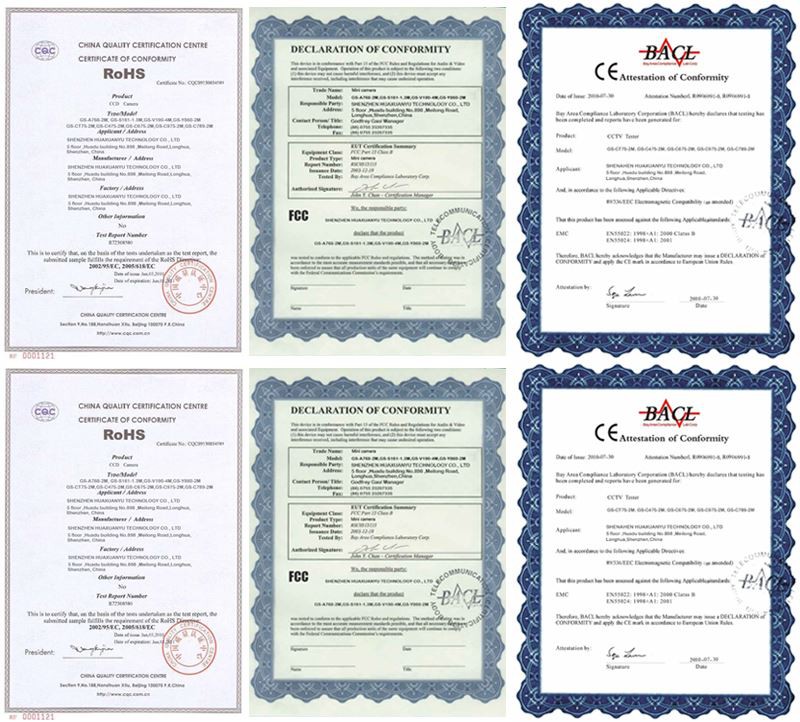
The factory was established in 2012, covering 20000 square feet, and has extensive knowledge in developing CCTV cameras.We have passed CE and FCC certifications.
Q: Can any CCTV camera work with any NVR?
Q: How does CCTV integrate with access control?
As one of the leading cctv camera manufacturers in China, we warmly welcome you to buy discount cctv camera for sale here from our factory. All our products are with high quality and low price. For quotation, contact us now.
Popular Products


